Foundation Repair in Bothell

If a basement wall has cracked, a floor has started to roll toward one corner, a crawlspace post has given way or water keeps pooling along the footing, Bothell Foundation Repair begins with that symptom. We work out the cause before suggesting a repair, and where the problem needs an engineer we say so.

Bothell sits in both King County and Snohomish County. Only about 27 percent of its homes date from before 1980, and the median year built is 1992, so newer poured walls and slabs sit alongside older crawlspace houses. We also cover Mountlake Terrace and Lynnwood.

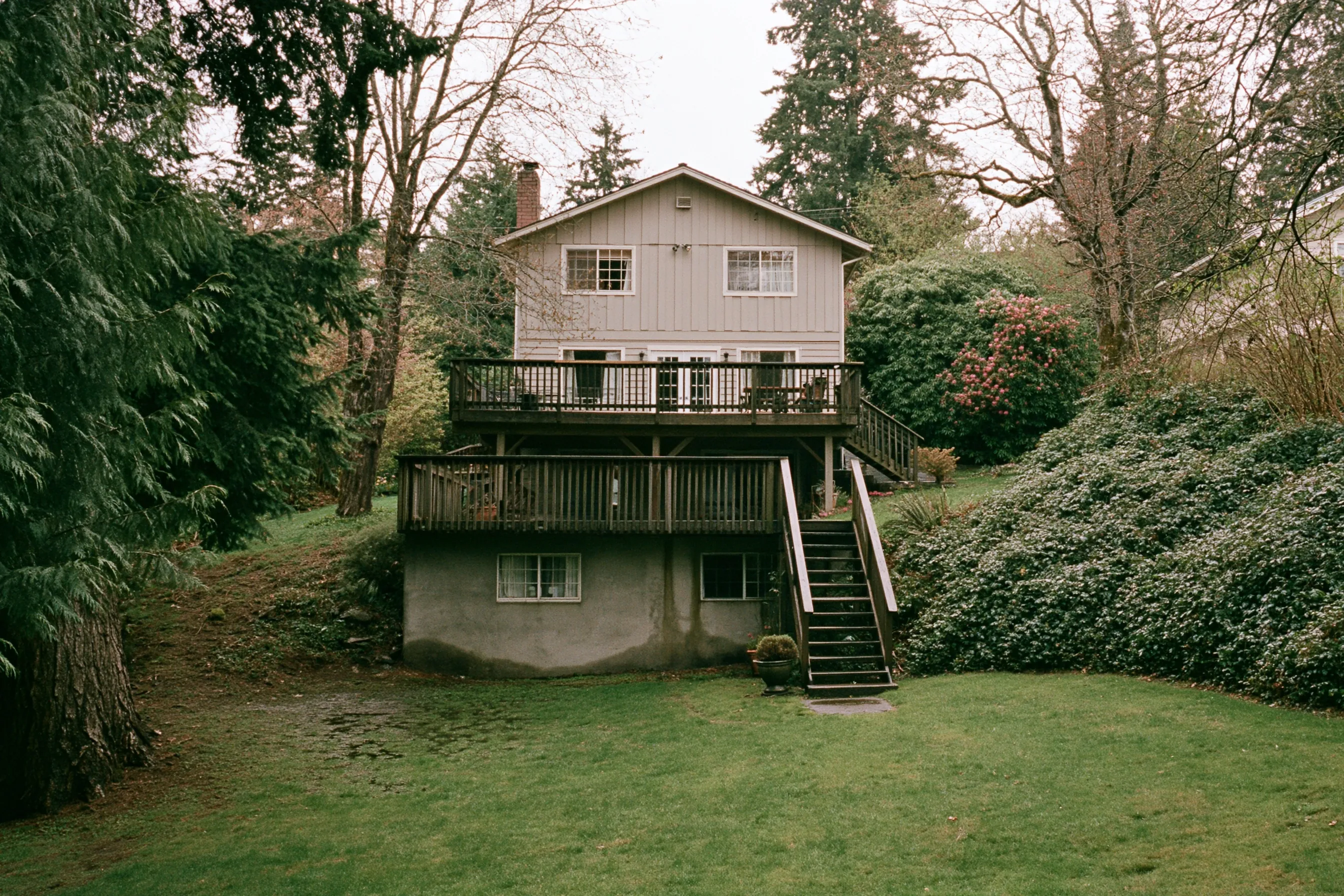
Rear of a two-story house on a sloped lot with a daylight basement, a concrete lower wall, a deck above and tall evergreens behind
Foundation crack repairFoundation drainageFoundation settlement and pieringCrawlspace post and beam repair

Our foundation repair services

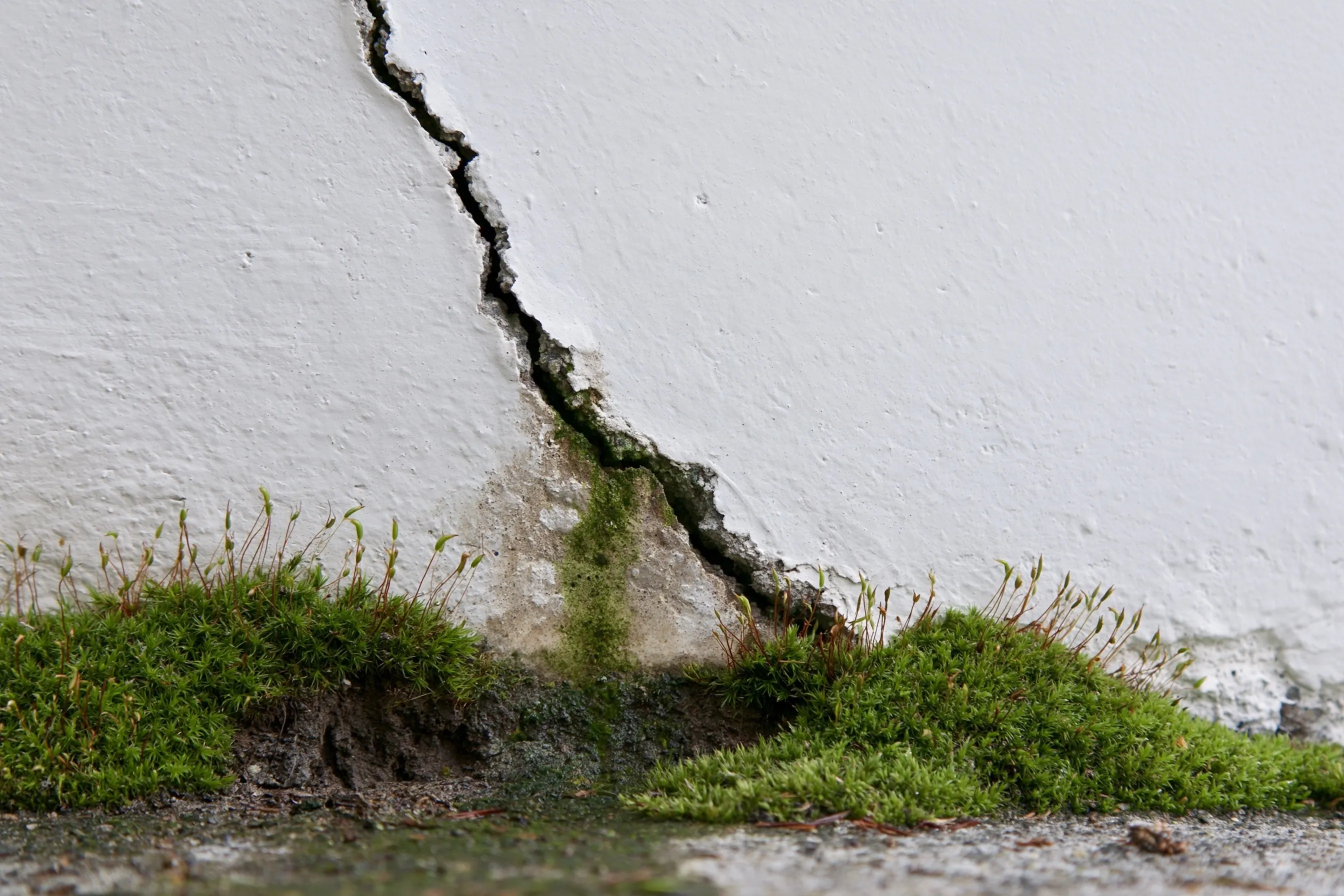
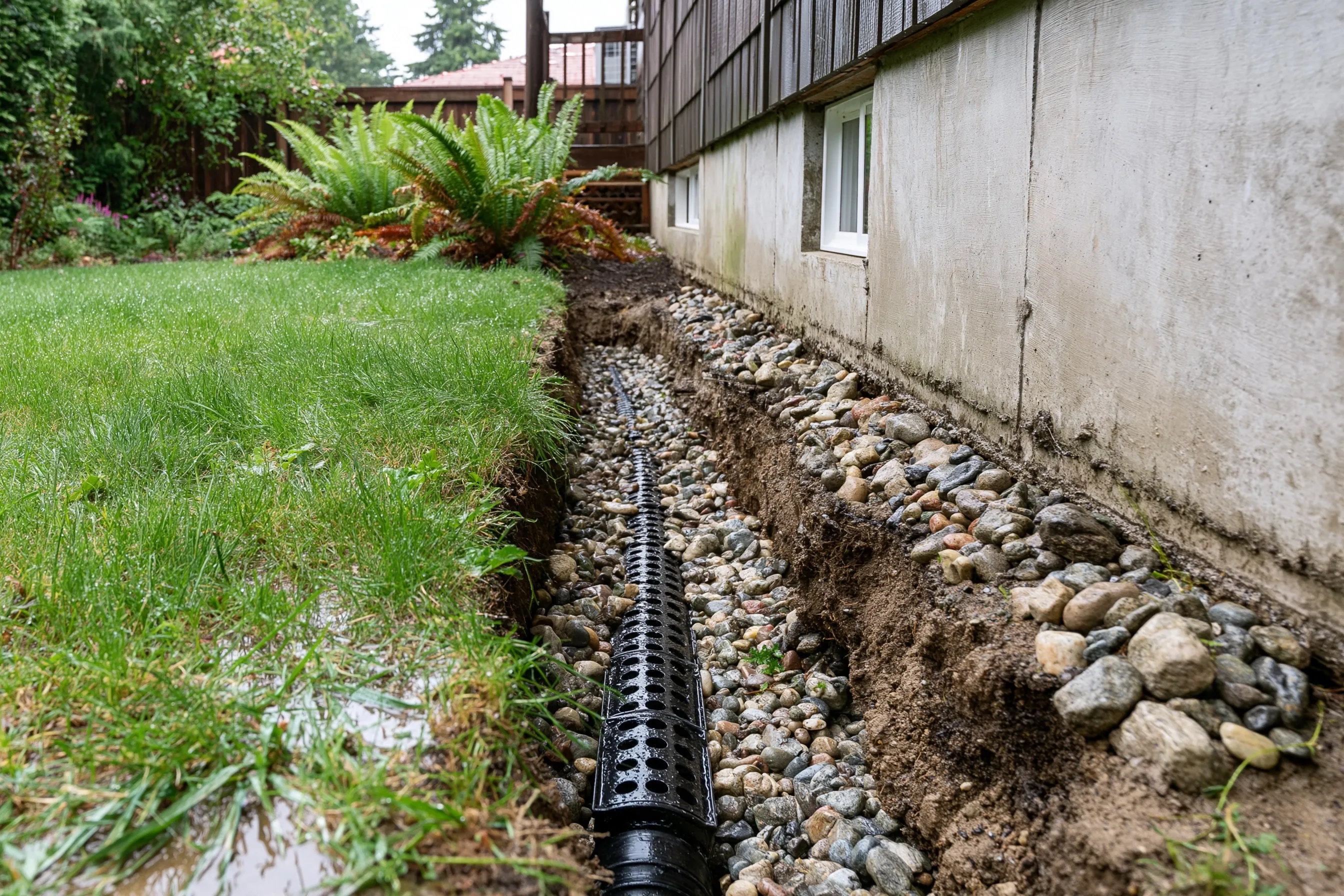
Close-up of a diagonal crack in a painted poured-concrete foundation wall with moss at the soil line and a damp stain below the crackNarrow trench along the outside of a concrete foundation wall with a perforated drain pipe laid in washed gravel at footing level, wet lawn and sword ferns beside it

Foundation crack repair

A crack in a foundation wall is a symptom, and the first job is reading it. A fine shrinkage line, a crack that is wider at one end and a horizontal crack in a block wall mean different things. Some are sealed and some go to an engineer first, and we say which before any product goes on.

Foundation drainage

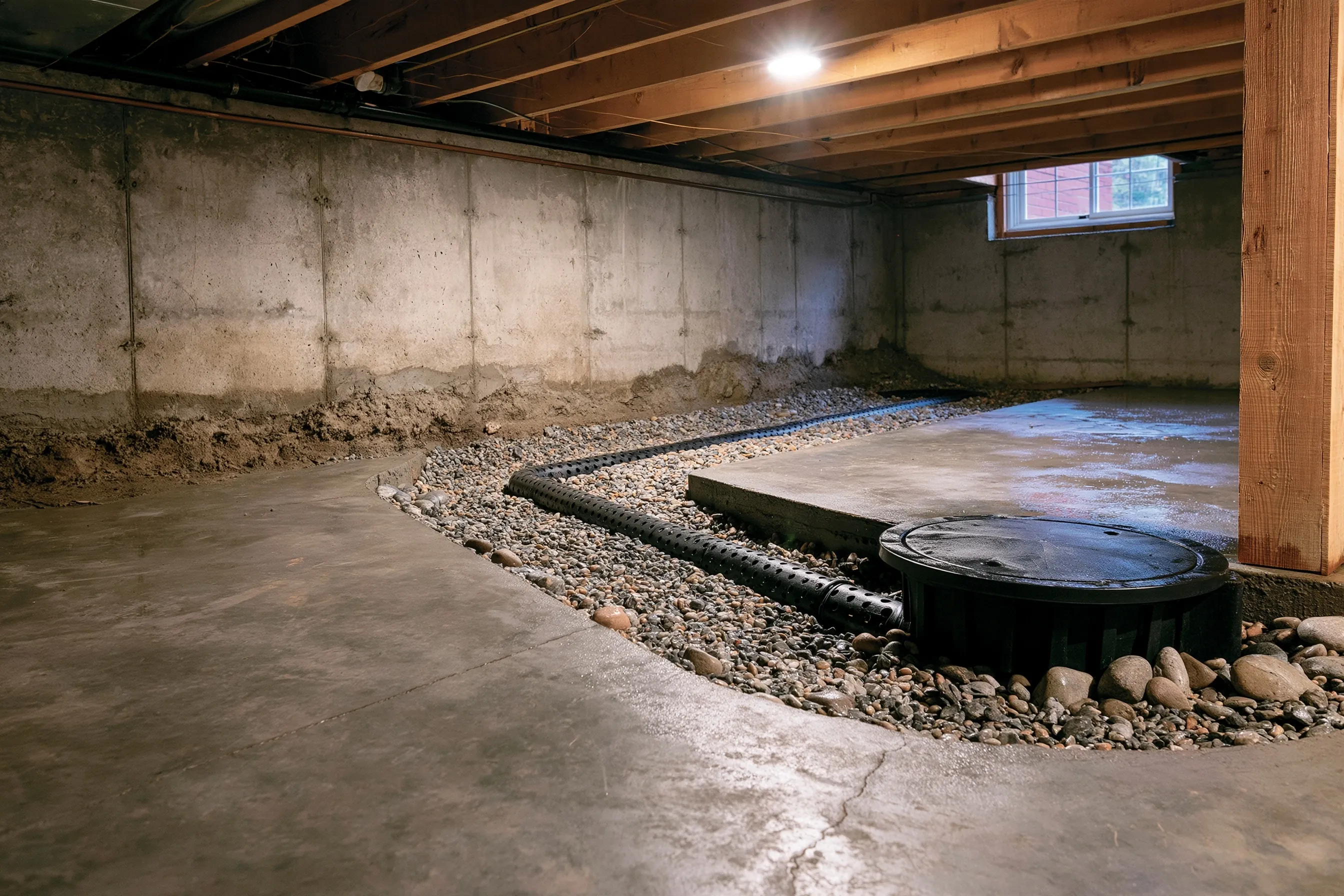
Water that sits against a footing can carry fine soil away and push on walls. Drainage work covers footing drains inside and outside the wall, gutters and downspouts, and the grade around the house, and where a lot slopes, the path the water takes after it leaves the house matters.

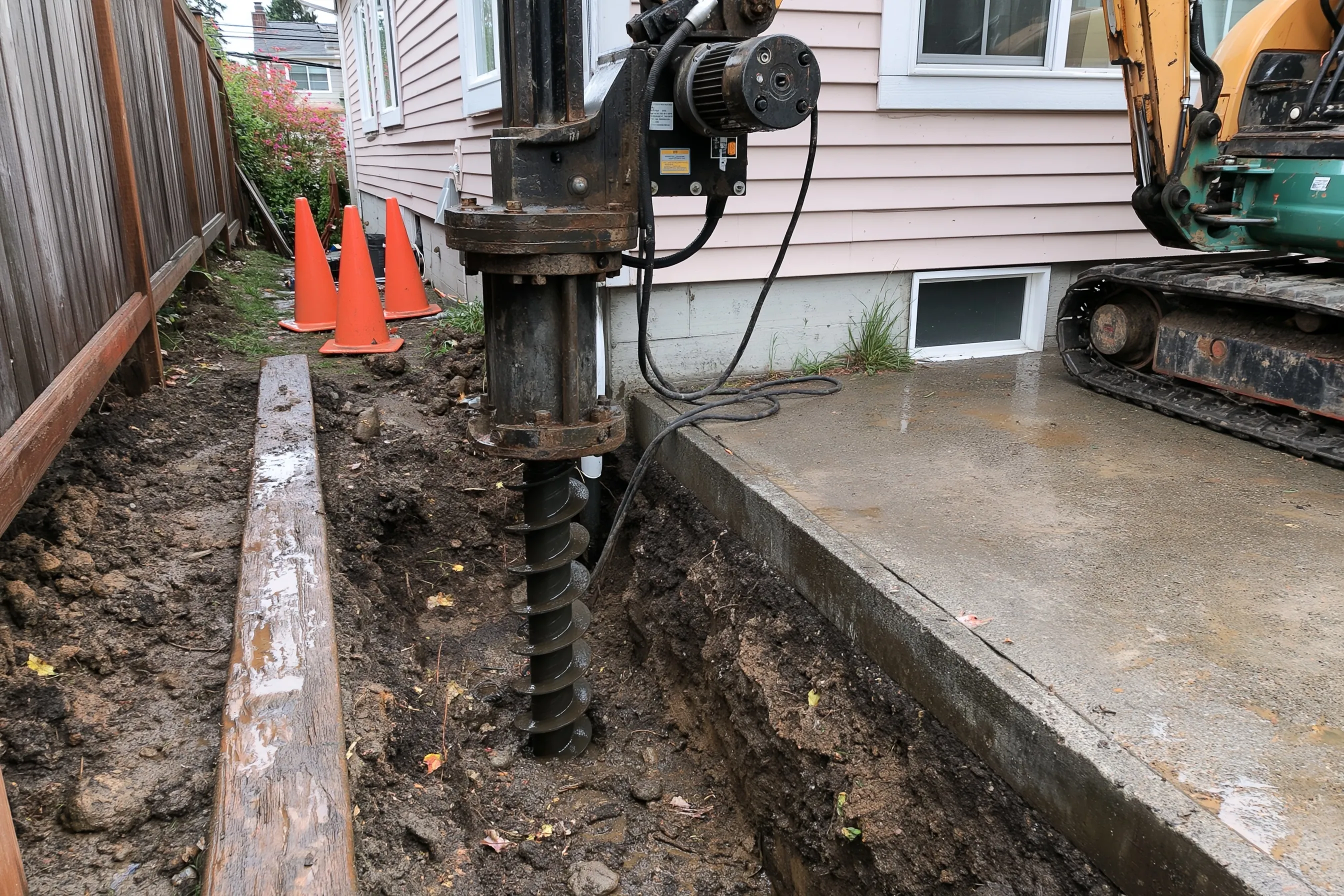
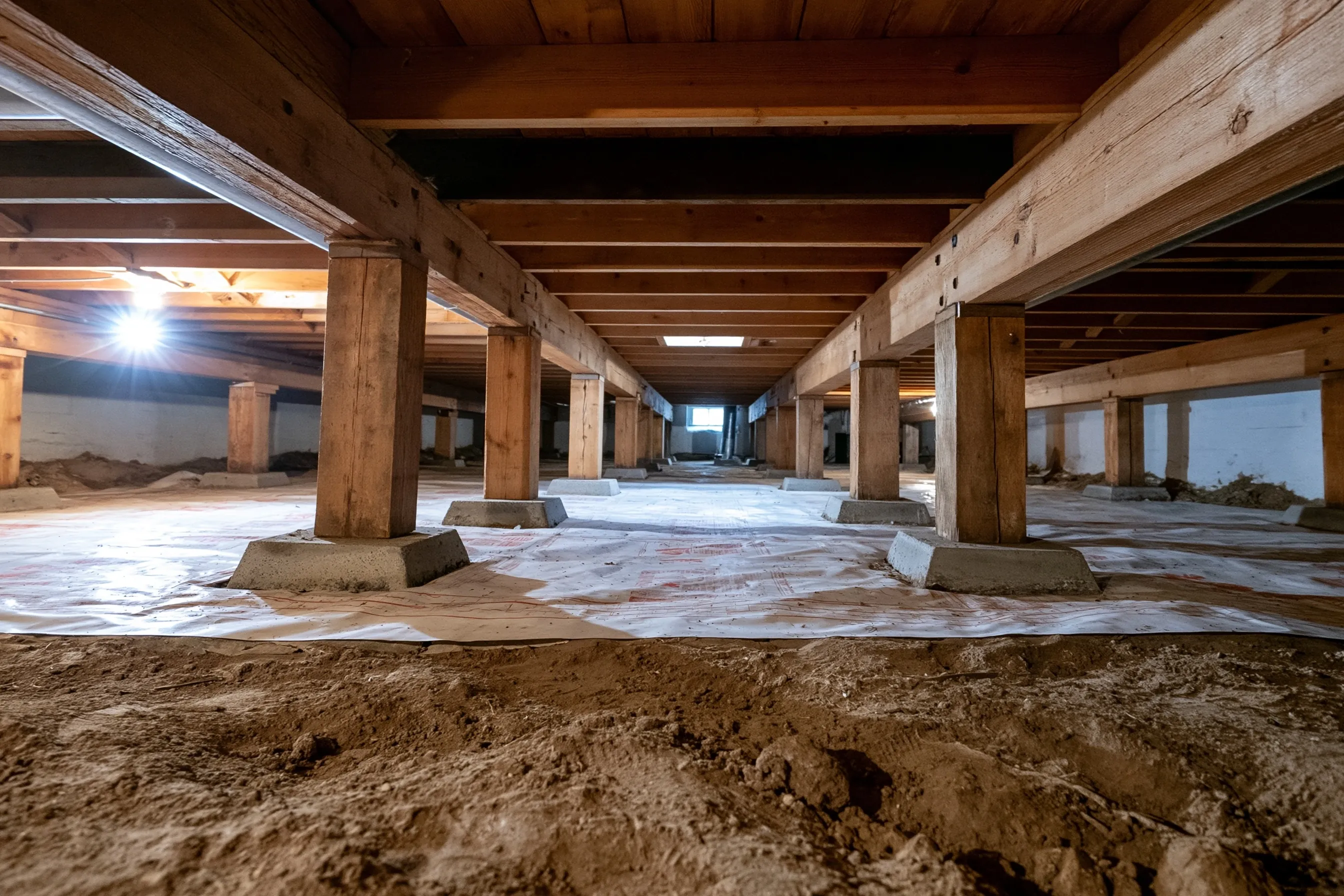
Hydraulic drive head and torque motor on a compact excavator beside a house foundation, a steel helical shaft being turned into a trench dug beside the footingLow-angle view inside a crawlspace of a house: a row of timber posts on concrete pads holding wood girders and joists over bare soil partly covered by a vapor barrier

Foundation settlement and piering

A floor that rolls toward one corner or a door that gaps at the top may mean the footing under that part of the house has dropped. Piers and underpinning are meant to carry a footing on firmer ground and help stop further movement. Bringing the floor back to level is not something we promise.

Crawlspace post and beam repair

Under a crawlspace house, floors are carried by posts, pads, girders and a sill plate. Bouncy or sagging floors, a rotted post or a cracked pier block can be traced under the house and repaired piece by piece, with the moisture that caused the damage dealt with as well.

Foundation repair costs

Costs here cover labor and materials for foundation work in Bothell, Mountlake Terrace and Lynnwood. Cracks, drains and piers are counted at typical sizes, so a job with more of any of them will run higher. Permit costs and any engineer’s design are not in the lines. The low end is a plain job with easy access; the open top end allows for tight access, deeper digging and damage found once the area is opened.

Foundation crack repair

  • One crack, up to 10 feet$350 – $1,000+
  • Three to four cracks, each up to about 10 feet$1,200 – $3,500+
  • One wide or structural crack$900 – $2,500+
What is included

We check what the crack is doing before choosing how to close it. Injection from the inside is used where it fits, and a wide or moving crack is examined more closely first.

Get a free quoteSee an example project

Foundation drainage

  • Inside drain along one wall, about 30 ft, no sump pump$1,500 – $3,800+
  • Inside drain around the whole perimeter, with a sump pump$7,000 – $18,000+
  • Outside footing drain, one side about 30 ft$3,000 – $4,000+
  • Outside footing drain, whole perimeter$12,000 – $16,000+
What is included

The drain is put where the water comes in, outside along the footing or inside at the base of the wall, and it runs to a sump pump or a safe outlet.

Get a free quoteSee an example project

Settlement and piers

  • Per pier$1,800 – $3,500+
  • One corner of the house, 3 to 4 piers$5,500 – $14,000+
  • One side of the house, 6 to 8 piers$11,000 – $28,000+
  • Whole house, 10 to 14 piers$18,000 – $49,000+
What is included

Steel piers take the load of a settled footing down to soil that holds. Count and depth come from the plan, and the plan states where an engineer’s design or a permit comes into it.

Get a free quoteSee an example project

Crawlspace posts and beams

  • Replace one post$350 – $850+
  • Three to five posts$1,800 – $5,500+
  • New beam and posts under one room$3,000 – $9,000+
What is included

New posts, pads or beams go in where the old ones have rotted or sunk, and the floor is supported while it is done. Any moisture in the crawlspace is checked too.

Get a free quoteSee an example project

Ranges are 2026 estimates, not quotes. Your written estimate is free and comes after we have seen the foundation.

Signs your foundation needs a look

A crack in concrete is not an alarm by itself, and HUD’s inspection guide calls shrinkage cracking rarely serious. What deserves a visit is change, and these are the changes worth writing down:

  • A crack that is wider at one end, or that has grown since you first saw it
  • Doors and windows that stick or have started to gap at the corners
  • A floor that slopes, or feels bouncy over a crawlspace
  • A horizontal crack along a block or concrete wall
  • Damp, stains or soft wood in the crawlspace or against the wall

Photograph each sign next to a ruler, write the date on the photo and measure the widest point of any crack. Measure again in a few weeks, and the two numbers show whether it has moved.

When an engineer is involved

HUD’s rehabilitation guide says to bring in a structural or soils engineer who specializes in this work when a foundation has settled, to find the cause and direct the repair. That is federal guidance and not a Washington rule. Whether Bothell asks for an engineer on a given job is a question we put to the city.

Washington treats two trades separately. Anyone who does construction or repair work as a business must be registered as a contractor with the state Department of Labor and Industries, and practicing engineering requires a separate engineer registration. We do not offer engineering design, so structural questions go to a registered engineer.

Foundation repair in Bothell homes

Bothell is a mixed-age city. Homes from before 1980 are 26.9 percent of the stock and from 2000 on 38.9 percent, with 34 percent in between. One-unit homes account for 59.6 percent, the median year built is 1992, and the median owner-occupied value is $925,100.

Houses built in the 1960s and 1970s make up about 22 percent of all homes. Whatever the age, the visit looks at the same things: cracks, water at the footing, floors that have dropped and the framing under the house.

Permits and hazard areas in Bothell

The city is the permit office for a house inside Bothell, even though the city spans two counties; a house in unincorporated King or Snohomish County outside the city limits is handled by that county. Bothell is one of the participating cities on the MyBuildingPermit regional tip sheet, which says work it does not list needs a permit, and which says that if your property is in a critical area, shoreline area or sensitive area, you should check with your local jurisdiction.

Bothell’s critical areas code includes landslide hazard areas, seismic hazard areas and areas the city director finds susceptible to events such as differential settlement. Whether your lot is in one is a parcel question for the city. We do not promise that any repair is permit-free.

Our process

01

Look at the house

We start outside, then go under the house or into the basement and finish in the rooms above, noting cracks, slopes, damp and soft wood as we go. Your own dated notes and measurements save time.

02

Find the cause

A crack, a slope or a damp wall each has a cause that sits somewhere else, in water, soil or the framing. We trace that before pricing a fix, because sealing a symptom does not change why it appeared.

03

Plan the repair

The plan says what will be done, where, and whether an engineer or a permit is needed. Where an engineer is needed, the design comes from the engineer.

04

Do the work

The work follows the written plan. If something turns up that the plan did not allow for, such as a buried pipe or more rot than expected, you hear about it before the plan changes.

05

Clean up and hand over

The work area is cleaned, and you receive a written note of what was done, so you have a record to compare against later.

What changes the cost

Which range applies depends on the soil, the access and the cause, and these differ from house to house. A visit comes before the written estimate. Here is what moves the figure:

  • What is causing the problem, and whether the cause must be fixed first
  • How much of the foundation is affected, one wall or the whole house
  • Access, such as a low crawlspace, a tight side yard or a steep slope
  • Whether an engineer’s design or a permit is needed
  • Soil conditions at the footing, which decide what kind of pier can be used
  • Finish work to put back, such as landscaping, drywall or flooring

Service area

Mountlake Terrace and Lynnwood both lie in Snohomish County with their own city permit offices. Each has a page of its own. If your address is nearby but not in one of these cities, ask.

Frequently asked questions

How much does foundation repair cost?

It depends on what is causing the problem and how much of the foundation it touches, so a listed range is a place to start. The factors above show what moves the number, and the written estimate comes after a visit.

Is it better to fix a foundation crack from inside or outside?

It depends on the crack and where the wall can be reached. A crack that is sealed on one side has not changed why it opened, so the first step is finding the cause, whichever side is worked on.

Does insurance pay for foundation repair?

We cannot say. Policies differ in what they cover, so the question belongs to your insurer, and it is worth asking before work starts. Photos with dates help.

Do I need an engineer?

Not for every crack or every job. HUD’s guidance puts an engineer on the cause of settlement, and whether a report is needed on your lot is for the city to say. If we think yours calls for one, we say so at the visit.

Do I need a permit?

It depends on the work and the lot. Structural repair is not something we assume is exempt, so we confirm with the city permit office before starting.

Can foundation settlement be reversed?

Not as a promise. Piers aim to carry the footing on firmer ground and help stop movement; raising the house is a different job that the engineer and the soil decide.

Request a free foundation repair quote

Tell us what you have noticed, which part of the house it is in and roughly when it began. Add whether the house sits over a crawlspace or a basement, and its age if you know it. A measurement of the widest crack gives us something to start from. We'll get back to you soon with an estimate or any questions we have. Estimates are free and there's no obligation.

Call (425) 491-5234

Call (425) 491-5234